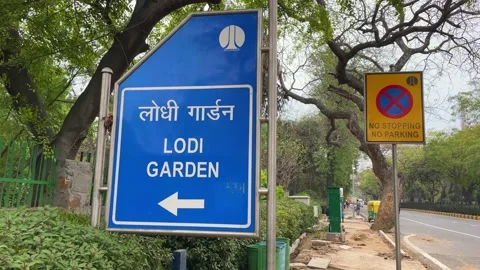
Lodi Garden or Lodhi Gardens
So parking tips are not the only hack you’ll find in this post 🙂 The walled precincts of Sikandar Lodi tomb surrounded by stone benches and rocks are ideal for relaxation. Probably the three things which have been here since the beginning of time 🙂 These are a welcome and positive fixtures in Delhi parks! But there are plenty of other beautiful flowers along the walkways too!
It is an excellent spot for a family outing, a romantic stroll, or even a solo escape from the city’s hustle and bustle. Lodi Gardens also has beautiful pathways, colorful flowers, and well-maintained lawns. Spread across 90 acres, this green space is a favorite spot for morning walkers, history lovers, photographers, and tourists. By the end, you’ll lodhi garden have all the information to plan a hassle-free trip to this iconic garden.
I Put a Bowl of Vinegar in My Kitchen Overnight — And the Odor Disappeared by Morning
The gardens' location in one of Delhi's most affluent neighborhoods ensures good infrastructure and security, contributing to visitor comfort and safety. The gardens' role in Delhi's social life extends beyond recreation to include cultural activities, informal education, and community building that contribute to the city's quality of life. The monsoon transforms the gardens' character, with overcast skies creating dramatic backdrops for the monuments and rain-washed surfaces enhancing colors and textures. Photography during spring season captures the gardens' most vibrant and colorful aspects, with the contrast between ancient monuments and fresh spring growth creating particularly striking compositions.
Are pets allowed in Lodhi Garden?
The tomb’s facade bears testament to the craftsmanship of the era, with intricate geometric patterns and inscriptions adorning its surfaces. Its design reflects simplicity and austerity, with a square plan and a towering central dome flanked by chhatris at each corner. Sikander Lodi’s Tomb, erected in 1517, stands as a testament to the modest yet dignified architectural style favored by the Lodi dynasty. Some of the notable monuments in Lodhi Gardens include Mohammed Shah’s Tomb, Sikandar Lodi’s Tomb, Bada Gumbad, Sheesh Gumbad, and Athpula Bridge. In 1936, the Archaeological Survey of India (ASI) took over the management and maintenance of Lodhi Gardens, recognizing its significance as a historical and cultural landmark.
It has no tomb underneath it, but it may have been built as a gateway or a memorial. The gardens are landscaped with lawns, fountains, ponds, pathways, and flower beds. The tombs are octagonal or rectangular in shape, with domes and arches. The garden then came under the control of the Mughals, who added some more monuments such as Athpula Bridge and Bonsai Park.
Garden of Five Senses Delhi, Entry Fee, Timings, Location and Top Attractions

He also commissioned several other structures such as Bara Gumbad and Sheesh Gumbad in the garden. It was built by Ala-ud-din Alam Shah, the last ruler of the Sayyid dynasty, in 1451. Lodhi Gardens was originally known as Bagh-e-Jud, meaning the garden of Jud.
Third, it highlights the garden’s role as a space for everyday social practices and interactions among Delhi’s diverse communities. It applies a three-layered analytical model to explore the garden’s multifaceted identity. The later tomb of Sikandar Lodi seems to have been copied from this Sayyid tomb. Both the Bara Gumbad and the mosque were built in 1494 during the reign of Sikander Lodi, there is also a residence surrounding a central courtyard, where the remains of a water tank can be seen. As there is little architecture dating to the Sayyid and the Lodi periods still standing, Lodi Gardens is an important archaeological site, and is protected by the Archaeological Survey of India (ASI).
- Even if you have limited time in Delhi, make sure you visit Lodhi Garden.
- LAYOUT’Bada Gumbad’ literally means the building with a big (bada) dome (gumbad).
- So visiting here during holidays (preferably evening time) would be a good idea for families.
- Visiting Lodhi Garden is not just about greenery – it’s a journey into Delhi’s historical and cultural past.
- This park, once known as Lady Willingdon Park, was developed in 1936 by the British and was later renamed Lodi Gardens after India’s independence.
- Its western wall contains a mihrab, and the other three sides have three openings each – a central doorway flanked by two arched openings to admit light and air.The central tomb chamber measures 10m on all sides and has several graves.
In 1947, after India’s independence, the park was renamed as Lodhi Gardens, to honor its original builders. They also relocated some villages that were situated in the area to create more space for the park. The garden remained neglected for centuries until it was restored by the British in 1936.
The garden is perfect place to host an array of variousactivities. Delhi is famous not only for quila’s, temples, and forts butalso famous for its garden all around. Lodi garden is a good picnic spot for the local people and good hotspot for morning walk and students alike. The architecture is in sync with nature and manmade beauty. Hence after theinauguration in the year 1936 it was also named as Lady Willingdon park.