List the locations of the following stadiums: Green Park Stadium Indira .
The garden is surrounded by lush green hills, forests, and fields that provide a contrast to the urban landscape of Chandigarh. Another legend says that the garden was created by Raja Bhoj, a legendary king of ancient India. Pinjore Gardens is not only a historical monument, but also a cultural treasure. It was built by Nawab Fidai Khan, a foster brother of the Mughal emperor Aurangzeb, in 1669. Pinjore Gardens is not only a place to admire the flora and fauna, but also a place to explore the rich history and heritage of the region.
Top Hotels Near Pinjore Gardens
Visitors can explore the intricately decorated interiors of these palaces and marvel at the exquisite craftsmanship. As mentioned earlier, the Shish Mahal and Rang Mahal are two of the most striking structures in the garden. Additional charges may apply for special events or exhibitions held within the garden premises.
- Situated at the foothills of the Mount Shivalik, Yadavindra Gardens is a delightful garden built in 17th century.
- This garden was designed by Nawab Fidai Khan, who was a renowned architect and one of the brothers of the Mughal Emperor, Aurangzeb.
- Yadavindra Gardens, Pinjore is located at the foothills of the Shivalik Range, approximately 20 kilometers from Chandigarh.
- The Charbagh design divides the garden into four quadrants with walkways and water channels intersecting at the center, creating a harmonious and balanced landscape.
It was built in the foothills of Himalayas as one of the Mughal gardens summer retreat for the Aurangzeb (r. 1658–1707), who then had his capital at Lahore, by his foster brother and architect Muzaffar Hussain. It is an Yadavindra Gardens example of the Mughal gardens architectural style, which was renovated by the Patiala dynasty Sikh rulers. The rest of the garden is laid out with ponds, flowers, trees, and fountains.

Pinjore Heritage Festival
This terrace is also known as the Top Terrace, as it offers a bird’s eye view of the entire garden and the town of Pinjore. The terrace also has a Japanese garden, with a pond, a bridge, a pagoda, and a Buddha statue. The terrace also has a cactus garden, with over 2500 species of cacti and succulents. The palace also has a hammam (bathhouse), with hot and cold water facilities.
Yadavindra Gardens is a stunning destination that seamlessly blends history, nature, and culture. Yadavindra Gardens is a breathtaking landscape located in the charming town of Pinjore, Haryana, India. In latest times, it’s been renamed as Yadavindra Garden withinside the reminiscence of Maharaja Yadavindra Singh former of the princely kingdom of Patiala. It is an instance of the Mughal Gardens style, and changed into constructed via way of means of Patiala Dynasty Rulers.The lawn is withinside the village of Pinjore lie 22 km from Chandigarh at the Ambala-Shimla avenue. Pinjore Gardens (additionally called Pinjor Gardens or Yadavindra Gardens) is placed in Pinjore It uses material from the Wikipedia article "Yadavindra Gardens".
- It is a Mughal architectural garden that was built by Nawab Fidal Khan Koka who was a renowned architect of his time.
- If you want to experience the best of history, architecture, and nature, then Pinjore Garden is the perfect place to visit.
- The garden is now a heritage site, managed by the Haryana Tourism Department, and a popular tourist attraction.
- Pinjore Garden also known as the Yadavindra garden in a 17th-century garden located in Pinjore near Panchkula.
The gate leads to a long water channel, flanked by cypress trees and flower beds. The garden also boasts of a variety of flora and fauna, including exotic plants, flowers, birds, and animals. He also added some modern amenities and attractions to the garden, such as a zoo, a nursery, and a museum. The most notable among them was Maharaja Yadavindra Singh, who gave the garden its current name, after his own. It was later restored and renovated by the rulers of the Patiala Dynasty, who acquired the garden in the 19th century.
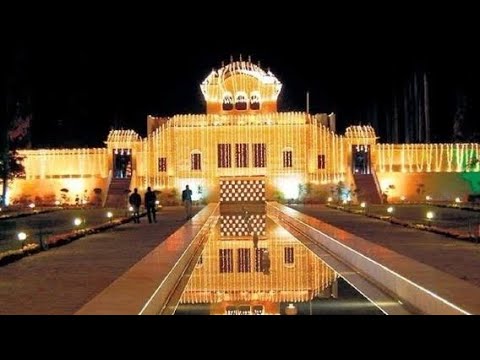
Drawing inspiration from renowned gardens like Shalimar Bagh in Kashmir. Spread over 100 acres, the garden reflects the grandeur of Mughal architecture with elements of Rajasthani and Persian styles. Government of Haryana decided to upgrade the festival to an international festival from 2018 onward, by inviting competitive entries, exhibitions and cultural performances from all other nations. The festival entails mangoes competition, carts competition for school students, cultural programmes, crafts bazar, food court and evening cultural performances. Pinjore Baisakhi Festival, a two-day spring festival of Vaisakhi is usually held in April of every year, with regional gourmet food, traditional handlooms and handicrafts, live folk arts and cultural performances, specially by the Haryana State Department of Information, Public Relations & Cultural Affairs at 6 pm.
Pinjore Garden is built in line with the Charbagh Pattern, which is a distinctive feature of Mughal architecture. This garden has been used as a setting for shooting a few Bollywood movies. The Maharaja Yadavindra Singh ( ) of the princely state of Patiala restored the garden to its former splendor. In the 19th century, when the garden was covered with wild outgrowth, it came under the territory ruled by the Maharaja of Patiala. One of the best places to visit in Chandigarh, Pinjore is a popular tourist attraction in India’s North.

The Zoo and Miniature Railway
Her book is regarded as the first serious study of Indian garden design. Corbusier could also have read Constance Villiers-Stuart’s account of the Pinjore garden (in The Gardens of the Great Mughals) – as Edwin Lutyens did when working on the design of New Delhi. Corbusier visited Pinjore’s Mughal Garden when working on the design of Chandigarh – and it is a pity he did not learn more from the experience. For a while I was transported back in time as I could visualise the dancers and singers entertaining the residents in the evenings. The Jal Mahal at the centre of a water pool is well lit. The residential palaces in the initial level have been tastefully transformed into a hotel and restaurant.