An evening in Pinjore Gardens
Government of Haryana decided to upgrade the festival to an international festival from 2018 onward, by inviting competitive entries, exhibitions and cultural performances from all other nations. The festival entails mangoes competition, carts competition for school students, cultural programmes, crafts bazar, food court and evening cultural performances. Pinjore Baisakhi Festival, a two-day spring festival of Vaisakhi is usually held in April of every year, with regional gourmet food, traditional handlooms and handicrafts, live folk arts and cultural performances, specially by the Haryana State Department of Information, Public Relations & Cultural Affairs at 6 pm. The garden and the temple complex laid in an open-air museum, set up by Haryana State Directorate of Archaeology & Museums, are integrated through well-laid-out and well-drained pathways to remove any water logging. The garden, covered with wild overgrowth, came under the territory ruled by the Maharaja of Patiala during the 19th century British Raj, who used the garden terraces to grow roses for making attar perfume for the maharaja.
- It features traditional Japanese elements such as stone lanterns, bridges, and koi ponds, offering a tranquil escape from the hustle and bustle of the main garden.
- He also added some modern amenities and attractions to the garden, such as a zoo, a nursery, and a museum.
- Conceived with grand vision during the Mughal period and featuring numerous water features, the potential for splendor is obvious.
- Furthermore, the management has developed an eco-friendly environment, upholding the garden’s natural aesthetics and promoting sustainable tourism practices.
- Special festivals such as the Pinjore Baisakhi festival (spring festival) in April, Pinjore Mango Mela in July and Pinjore Heritage Festival in December are major annual celebrations at the gardens.
Cactus Garden Chandigarh
- Pinjore Gardens is a budget-friendly and flexible destination that can be visited by anyone and anytime.
- Have you ever wondered what it would be like to visit a Mughal palace and garden?
- It is a place where history comes alive, allowing visitors to connect with the past in a meaningful way.
- The garden is a fine amalgamation of Islamic and Sikh architecture as it was built by Mughals and maintained and renovated by jat Sikh rulers of the Patiala Dynasty.
- This terrace is also the main venue for the cultural events and festivals that take place in the garden, such as the Baisakhi and the Mango festivals.
- Various competitions are held during the festival like drawing, rangoli, folk dance, and Mehendi competition.
At the heart of the Pinjore Gardens lie the central waterway highlighted by beautiful fountains and lined with trees, offering a regal ambience that transports visitors through time. Over the years, it has attracted countless visitors with its tiered gardens, captivating water features, and the grandeur of the Shish Mahal and Hawa Mahal located within its precincts. Located in the majestic land of Chandigarh, the Pinjore Gardens, also known as Yadavindra Gardens, is a spectacular Mughal-style garden that invites visitors to embrace the confluence of history, culture, and natural beauty. The best time to visit Yadavindra Gardens is from October to March when the weather is cool and pleasant, perfect for exploring the gardens and enjoying outdoor activities. Built in a similar style to Shalimar Bagh in Kashmir, the garden has been laid in seven terraces, with the main gate of the garden opening into the highest first terrace, which has a palace built in Rajasthani–Mughal style.
Yadavindra Gardens Explained
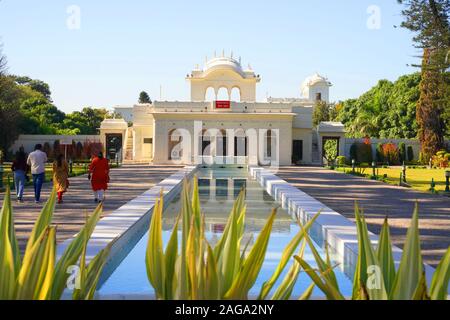
The lowermost terrace has an open-air theatre, which was designed in form of disc. Splendid Fountains and beautiful tree groves are laid in the next terrace. The third terrace has cypress trees and flowerbeds which leads to dense groves of fruit trees. The garden was renamed after him and has been a prime location for film shooting. Maharaja Yadavindra Singh restored the garden to its former grandeur.
Shimla Summer Festival
I was a teenager then and was taken to visit the sprawling Pinjore Gardens in Panchkula district of Haryana. Organized after a collaboration with the Horticulture Department, the festival seeks to commemorate the efforts of the above department in the lives of the citizens residing in the nearby areas. In the Pinjore Garden Chandigarh, festivals take place in the area annually, with celebrations occurring on the days of the Pinjore Baisakhi Festival and Pinjore Mango Mela, which take place during June and July, adding to the increasing number of attractions in the place. The terraces end with the lowermost one caving in the figure of a disc-like structure, adding another layer of awe and wonder to the vast grandeur of the terraces. The next terrace is known for its beautiful surroundings since it contains a fountain bed along with a platform where we can relax and admire the view.

Tickets for Yadavindra Gardens
The terrace also has a cactus garden, with over 2500 species of cacti and succulents. The palace also has a baradari (pavilion), with a dome and pillars, offering a panoramic view of the garden and the surrounding hills. The palace also has a hammam (bathhouse), with hot Yadavindra Gardens and cold water facilities. The terraces are connected by flights of steps and waterfalls, creating a harmonious and soothing effect.
Pinjore gardens came under the territory of King of Patiala during the 19th century. The garden was built in the foothills of the Great Himalayas as a summer retreat for Mughal emperor Aurangzeb. It is styled by the magnificent mughal architecture and later renovated by Jat Sikh Rulers of Patiala. Yadavindra Gardens which was previously known as Pinjore Garden is a 17th century garden situated in Pinjore in district Panchkula in Chandigarh Tricity.
Pinjore Garden is open to visitors throughout the year, offering a unique experience in every season. Today, Pinjore Garden stands as a symbol of India’s rich cultural heritage and a testament to the timeless beauty of Mughal architecture. The sound of water cascading through the channels adds to the tranquility and charm of the garden. The garden’s water features are fed by natural springs and are meticulously maintained to ensure a continuous flow. Water plays a central role in the design of Pinjore Garden, with numerous fountains and water channels enhancing its aesthetic appeal.